
With winter approaching, many Americans are thinking about how to cut back on energy use, reduce heating costs, and keep their homes warm and cozy. But what about those of us who rent the apartments, homes, and spaces we live and work in?
We have lease-friendly, energy-saving tips for renters looking to reduce their energy consumption.
1. Turn the thermostat down
Turning down your thermostat one degree Fahrenheit amounts to a 3% reduction in climate-control-related energy use. Like many renters, rather than cranking up the heat, I’ll be using my cozy sweaters, fuzzy socks, and slippers around the house this winter.

2. Install DIY or manufactured door sweeps
No one likes to feel a cold wind blow over freshly bare feet after coming home from work or school, but lots of doors have a big enough gap between the bottom of the door and the floor that heat escapes while cold air blows in. Air leaks can cause up to 30% of energy loss in a home.
Reducing airflow under your door can be as simple as rolling up a towel and placing it against the inner seam along the bottom of the door – this is a DIY door sweep. If you’re looking for an option that stays in place when you open and close the door, there are several door sweep options available that are completely removable.
Renters should be mindful, though, when selecting a door sweep. Some – but not all – door sweeps require hardware to secure them to the door, which could damage the door. Others may use an adhesive to secure them to the door, which may damage paint when you remove it. The safest option for renters are slide-on door sweeps that don’t use adhesives or hardware; these sweeps simply slide on to the bottom of your door.
These are some of the easiest efficiency tools to install and remove, making them perfect for the energy-conscious renter. Once you move out, you can simply remove the sweep and bring it along to use in your next home.
3. Swap your light bulbs for LEDs
The average American household has around 50 light bulbs. Each one of them uses energy, but how much energy they use is, in part, up to us. A lot of homes today still use compact fluorescent and incandescent bulbs, both of which are inefficient compared to LEDs.
LED bulbs don’t just use significantly less energy, they also last longer. For a renter-friendly upgrade, remove your home’s original light bulbs (if they’re not already LEDs), store them safely to minimize the risk of one breaking, and replace them with LEDs. When you move out, swap the bulbs you set aside back and take your energy-efficient bulbs to your next home where they can last for years.

4. Plug electronics, appliances into an advanced or switched power outlet
A huge amount of energy waste – as much as 20 percent – comes from “vampire energy”, the electricity your appliances and electronics use when in standby mode, using energy simply because they are plugged in. For example, microwave ovens typically use more energy displaying the time in a year than heating food.
For renters on a tighter budget, a switched power strip is an affordable way to attach many appliances and electronics in a room to one strip that you can switch off as you leave the room. For even more energy savings, renters can opt for an advanced power strip. These power strips will automatically cut power to devices and appliances in standby mode, saving you energy without the hassle. Some options even have “always on” outlets paired with ones that automatically cut power.
5. Wash clothing with cold water
Hot water doesn’t just make colors bleed, it can also make renters bleed energy and money. It takes a lot of energy to heat water; that may be worth it for a shower in the dead of winter, but our clothes don’t need a hot bath to get clean. In fact, cold washes degrade our clothes less quickly, meaning your favorite sweater stays in rotation longer.
Most washing machines allow you to customize the water temperature. Sometimes that looks like a “colors” option which uses cold water to avoid bleeding from colorful garments. Other times, you can set your temperature manually to the lowest setting.
6. Air dry your clothes
Skipping the clothes dryer and switching to air drying (like a clothing line, or drying rack) saves you on energy; rather than running an entire machine to dry our clothes, letting the water evaporate happens naturally.
Air drying is even recommended for many apparel items. Much like washing your clothes with cold water, air drying your clothing also has benefits for your wardrobe’s longevity. The heat, friction, and motion of the dryer can damage your clothing over time, fraying seams and wearing away delicate fabrics.
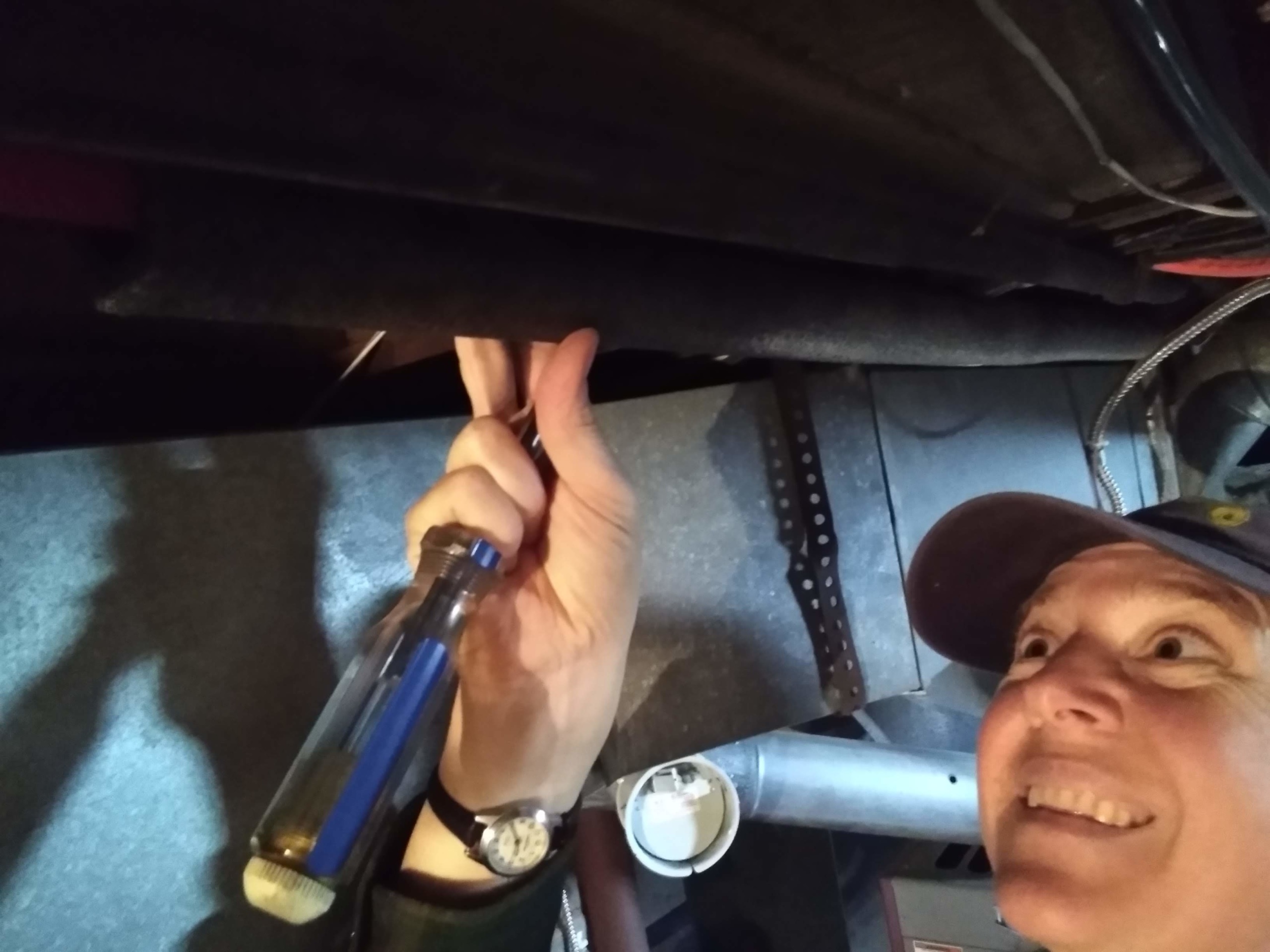
7. Insulate your pipes
Pipes that carry heat throughout your home – for example, your water heater’s hot water pipe – can also allow some heat to be lost along the way. That doesn’t just mean that your shower is colder than you want, it also means that you’re using more energy than you need to heat your water.
Simple, pre-cut foam insulation can help keep the heat from transferring along the way. This hack is also entirely reversible and easy to remove when you move out.
8. Install insulating window film
We all love natural light, but our windows can also be a big source of energy waste. Window panes are some of the thinnest barriers between your home and the elements, but there are ways to reduce the resulting energy losses.
Luckily, there are many insulating window films out there. Some require a heat gun to install, so be sure that whatever film you decide on will be within your budget and your tools. Window films add another layer of insulation between the warm air inside your home and the winter cold outside. Some also reduce the heating impact of sunlight coming into your home. Generally, these kinds of films are removable, but results and lasting impacts may vary depending on what type you go with.
If you’re concerned that your top choice might not be removable, contact your landlord or property manager to get the go-ahead.
9. Insulate your power outlets
Oftentimes, our power outlets let cool air in. One way to help cut back on that waste is to insulate your outlets. There are a variety of products on the market to do just that, most often foam backing called a gasket that you place on the back of the outlet and screw back into place.
Before you start this project, you should turn off power to the outlet with the appropriate breaker and only then remove the cover plate. Next, you follow the instructions on a foam gasket purchased at the hardware store, replace the plate, and flip the breaker. This hack does need some tools and supplies, but is completely reversible when done correctly.
10. Prioritize energy-efficient features in your rental
If your lease doesn’t end for a while, it may be worth talking to your landlord or property manager about bigger energy efficiency upgrades like ENERGY STAR appliances, adding insulation, or putting in storm windows.

But if you find yourself looking for a new rental, keep an eye out for some key features:
- ENERGY STAR appliances – these are some of the most efficient models on the market and will save you energy and on your utility bills.
- Get a home energy assessment. Before you commit to renting a space, have it assessed for air leaks and other energy-draining issues.
- Look into rentals with smart home features that will help you save energy, stay comfortable, and save money.
If you use these tips in your rental, share your story below!

Share your energy efficiency story
We want to hear how you’re doing more with less energy! Share your story with our friends at Environment America Research & Policy Center.
About the Author

Caitlin Soch
Campaign for 100% Renewable Energy, Associate, Environment America Research & Policy Center
Caitlin works on Environment America’s solar power and energy efficiency campaigns. Caitlin lives in Denver with her Shetland Sheepdog, where she enjoys hiking, paddle boarding and trivia.